ARCHIVEPAST INTERVIEWS
Saida Sekizai – Sculptor
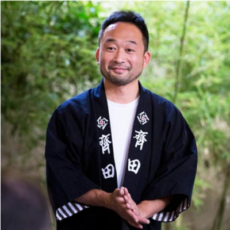
Saida Takaaki
(Saida Sekizai)
Saida Stone Shop has been engaged in stone processing and sculpture in Kameoka, Kyoto since its establishment in 1902.
This time, we interviewed Mr. Takaaki Saida, the 5th generation of Saida Stone Shop who Joined Stonemason company SAIDASEKIZAI in 1999.
Mr. Takaaki Saida, the 5th generation of Saida Stone Shop
– Did you receive some specialized education to become a sculptor?
Yes, I joined Stonemason company SAIDASEKIZAI in 1999 and 6 years later in 2005 I obtained “First Class Stone Processing Technician” designated by the Minister of Health, Labor and Welfare. And 2 years later in 2007 I acquired “Certified Craftsman Kyoto” designated by Kyoto Prefecture. And in 2013 I Acquired “Traditional Craftsman” designated by the Minister of Economy, Trade and Industry.
– I see. Where can we meet such stone lanterns?
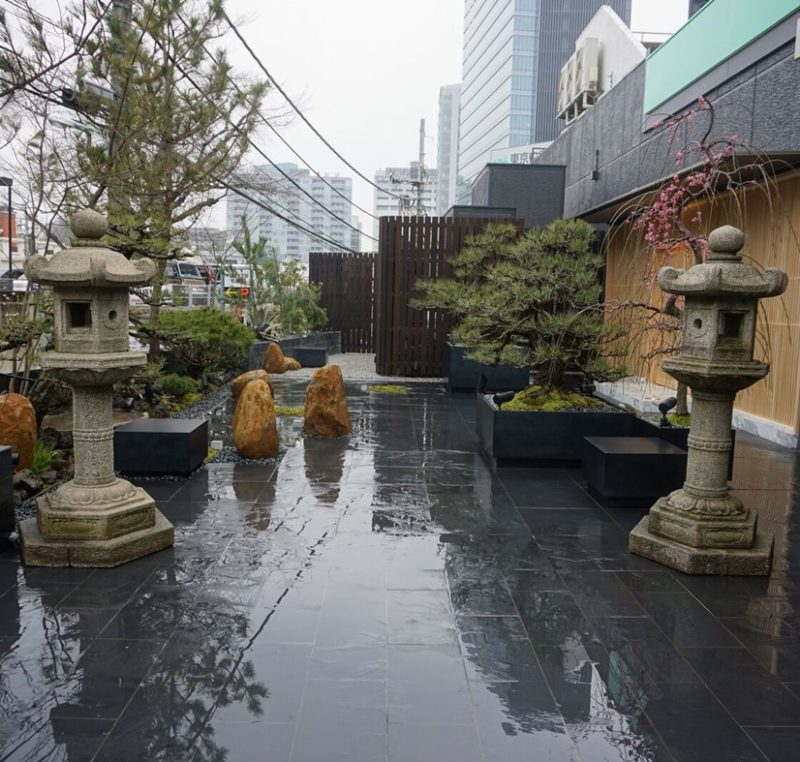
As you know the history of stone lanterns in Japan is rather old. It was originally brought to Japan with Buddhism by Silkroad in the 6th century. Therefore first time stone lanterns were put at Buddhism temples. But over time people began to put it in Shinto temples also. From the 17th century, stone lanterns started to appear in the tea gardens. And recently it can also be seen in private gardens.
People started to use stone lanterns not only for ritual but also for decoration and enjoying landscapes. By the way, you can see our stone lanterns at fashionable places in Tokyo where young people come to enjoy modern things. It shows how traditional stone lanterns can be combined with modern architecture.
– Which kind of stone do you use in your work?
First of all, I want to say that stone is a solidified energy of the earth. And I try to make works that can allow you to feel that energy. Suejiro Saita, the founder of the company, began to mine the Hoki stone in the mountains of Hoki Village, the place where our company was established.
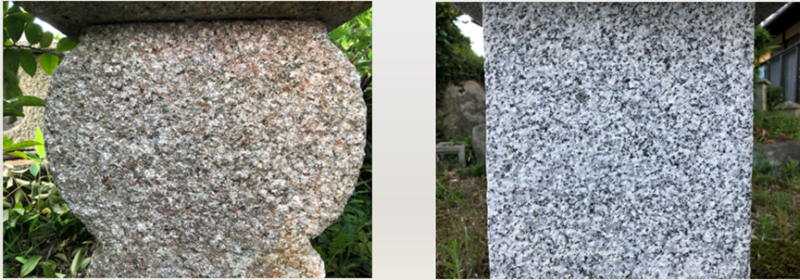
Nowadays we use some types of stone. First one is called Kako-gan, rather popular type in Japan. It is a crystalline stone, formed from underground magma that has cooled and hardened deep within the earth’s crust. It is hard, resistant to weathering, heavy, and has a low water absorption rate compared to other stones. This durable and “strong stone” feature has been used since ancient times for signposts, stone torii gates and stone walls.
Next one is called Mikage-ishi, such stone can be mined in Shimane prefecture and just 10% of our stone carving products are made from this material. And sandstone type of pyroclastic rock, which is tuff formed by solidifying volcanic ash. Because of it`s soft, it is easy to process, but it is fragile.
– How long does the process of stone carving take?
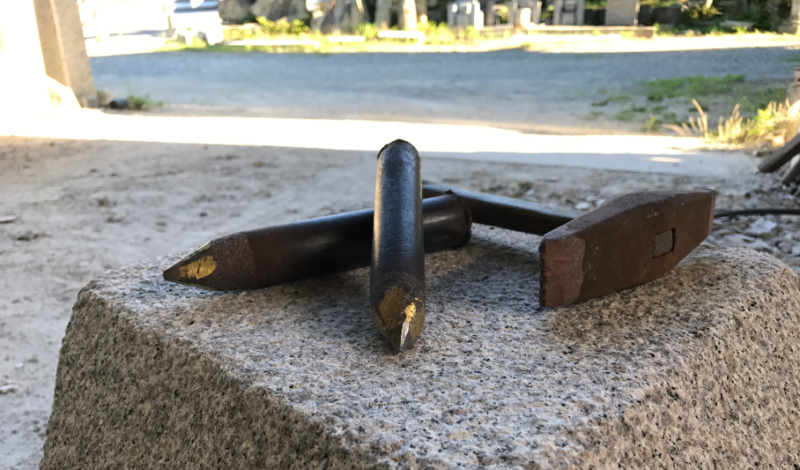
If you don’t use a special machine the process of stone carving takes a lot of time, because the production process has a lot of steps of creating. For example, sumikake is step of marking lines with ink, ishi mawashi is creating the place and further step by step.
– As every Japanese craft do you have your own philosophy?
Yes, sure, that’s why we don’t use machine and finishing our products by the hand. This gives the stone, which used to be cold, a feeling of warmth as if warmth resides in it. At Saita Stone Shop, we use the techniques we have cultivated over our history to create works of art that can be used in various scenes of daily life.
– Do you create only stone lanterns at your shop?
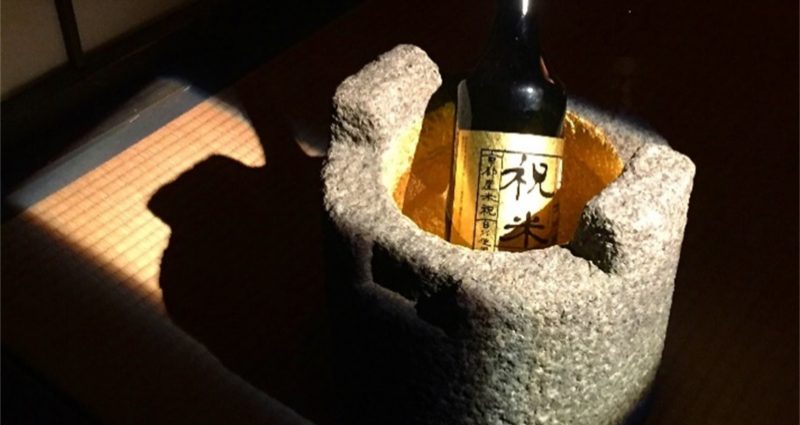
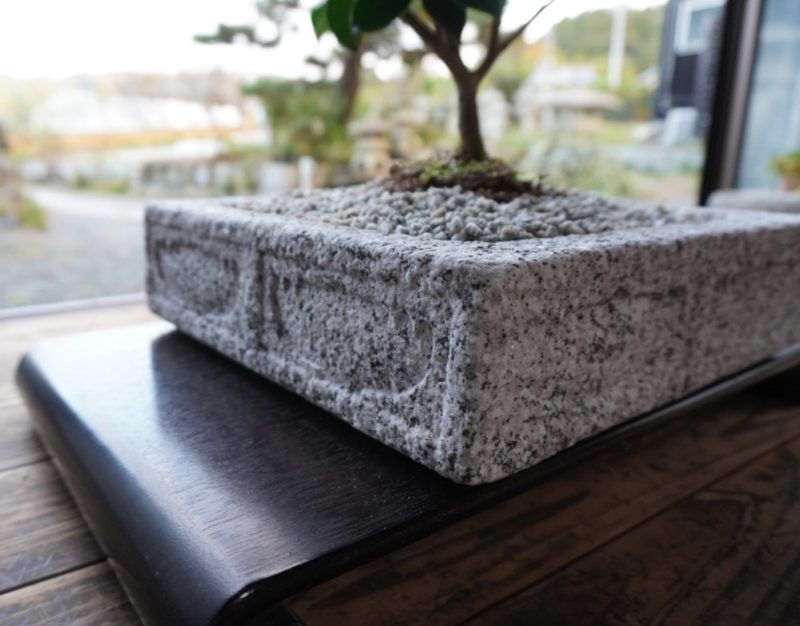
No, not only stone lanterns. As a craftsman who is proud of his craft and tradition, I want to make people more interested in these arts of stone carving therefore I decided to create something else. For example, a wine cooler with masonry technology, bonsai pot, table Lantern, and kouzama is a type of decoration used for sculpture pedestals.