ARCHIVEPAST INTERVIEWS
Kyokoma Jakkyu – Traditional spinning tops artisan
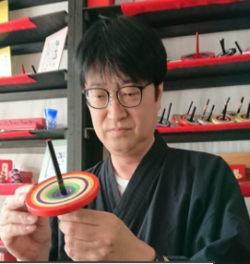
Yoshiyuki Nakamura
(Kyokoma Jakkyu)
Mr. Yoshiyuki Nakamura is an artisan creating kyo-koma – traditional Japanese Kyoto style spinning tops, which were introduced to Japan in the Asuka period.
Mr. Yoshiyuki Nakamura is an artisan creating kyo-koma – traditional Japanese Kyoto style spinning tops, which were introduced to Japan in the Asuka period.
– First of all, could you tell us what is the koma?
I guess you have at least heard that komas are children’s toys or maybe you have tried to play with it. I mean that such toys are not only available in Japan, but in Japan we have our own traditional craft related to them and called koma (in English it is called “spinning top”). These traditions are different according to different region. It has a long-long history and can be found in different parts of Japan. It`s a very popular toy and the same time is a good luck charm. In Japanese language it`s written by 2 characters 独楽, first one means “alone/ by yourself”, and second one means “having fun” so it means that you can entertain yourself.
– But why your spinning top calls kyo-koma and which specificity does it have?
It`s usually called koma, but since we have our own specific tradition of such craft in Kyoto, we call them Kyo-koma, which is short for Kyoto Koma.
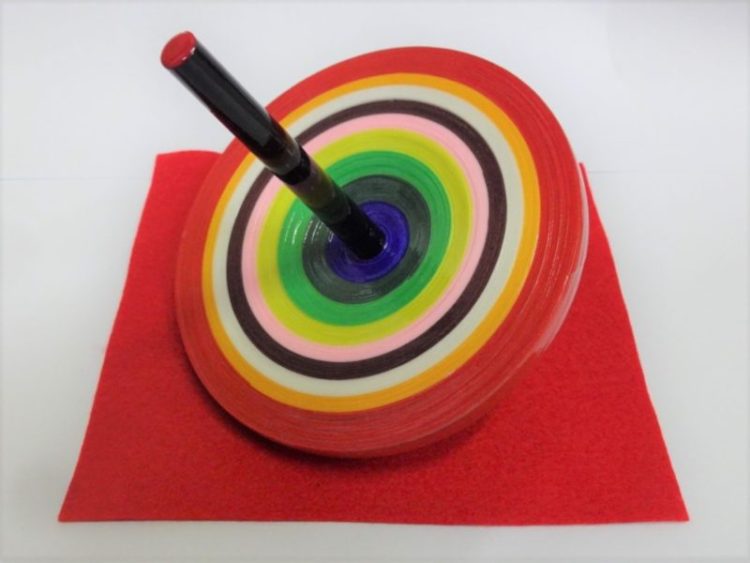
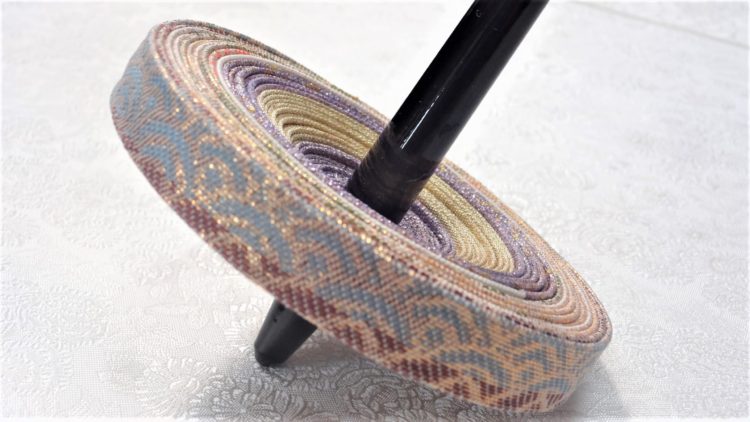
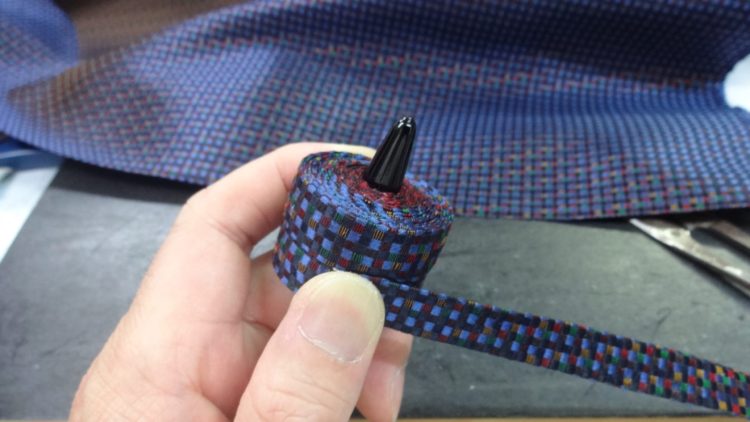
Usually koma are made of wood, but in Kyoto koma are all made of small strips of cloth wrapping around the core. And that is what make them different from all other koma – the material the made of and the way of creating them.
Kyo-koma has more that 400-years history, so the first period when it appeared was Azuchi-Momoyama and it was made of kimonos` leftovers fabric and it was the privilege of women of highest aristocracy layers. So, they were playing spinning top with the slight movement of their fingers, and it was very elegant and a calm game.
– Could you tell us about modern time of kyo-koma?
The time have passed and nowadays this type of spinning toys you can find only in Kyoto. And they all are made only in our shop, and we have only two artisans here – my wife and me. Nowadays we have 2 major types of traditional kyo-koma. The first one is a classic type of traditional kyo-koma made of silk. The second one is made of colored cotton. Historically, this method has been used for about 100 years. The characteristic feature of the such kyo-koma is that you can express patterns like the annual rings of a tree in a colorful way. Also, this one is easier to balance because of the type of cloth they are used. It`s easier to work with cotton than with silk fabric. It helps you to create different pattern and various shapes of koma. This is the mainstream of kyo-koma nowadays.
– Is it still popular toy maybe for children?
Yeah, it`s originally a child`s toy, but modern kids don`t play it anymore. But in Japan it generally believed that playing koma game at New Year holiday brings a good luck. Actually, the word for spinning in Japanese language sounds “mawaru” and it`s the same word that would be used for things “coming back to you”, so it`s like “what goes around comes around”, that`s why it is some kind of a nice souvenir of wishing good luck and also they are frequently used as a decoration in a company reception rooms and restaurant like a lucky item.
– Could you briefly explain how to create kyo-koma?
First of all, we prepare materials, for example – cotton. Usually it looks like paper, but it is glued together like a bed sheet, so it is rough and a bit stiff. Another one is the stick for the core. I mainly use bamboo for small one. For the larger stuff, I use wood. First step is to apply some glue on the tip of the fabric and wrap it tightly around the core. If we use some stripes of different color, we wind it up one by one. The key here is to roll it up strongly with a certain amount of force. When we finish this process, we fix the shape into a mortar shape and then check the overall balance. After that, to make it harder you should overcoat it several times and it will be completed in about a week.
– And one more question, please introduce your product.
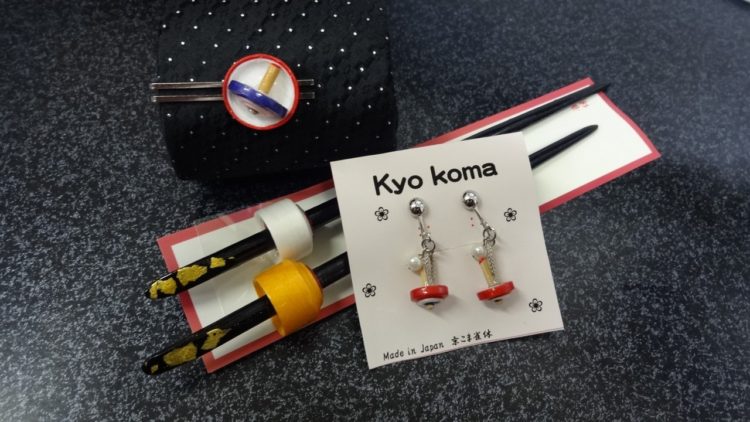
Creating kyo-koma we can make not only a toy itself, but it can also be different type of accessory such as earrings, brooch, pin etc., or decoration for chopsticks, necktie and etc. And sure, we have a lot of classic kyo-koma of different types and shapes: two-stage koma where you turn the top of the stuff, fruits-shape koma, vegetable series which are made by motif of vegetables indigenous to Kyoto and known as kyo-yasai. There is also a gorgeous kyo-koma with pure gold leaf on it. Another one is a kyo-koma of the halberd of Gion Matsuri, a famous festival in Kyoto.