ARCHIVEPAST INTERVIEWS
Soryu Gama – Pottery Studio

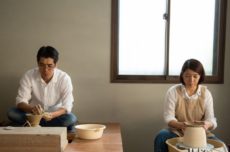
Mr. Soryu Wakunami &
Mrs. Madoka Wakunam
(Soryu Gama)
Kyo-yaki Pottery and Koishiwara Pottery – at Soryu-gama, these two totally different styles mix and blend to nurture and present to the world, a new pottery.
Kyo-yaki Pottery and Koishiwara Pottery – at Soryu-gama, these two totally different styles mix and blend to nurture and present to the world, a new pottery.
– Please could you briefly introduce yourself.
Mrs. Wakunami: My name is Madoka Wakunami, I was born in 1976 in Fukuoka, graduated from Saga University, admitted to the Potter’s Technical School. I`m the 14th generation with Koishiwara Pottery tradition.
Mr. Wakunami: My name is Soryu Wakunami, I was born in 1977 in Kyoto, graduated from Seian University, admitted to the Potter’s Technical School, finished Training Course of Traditional handicraftsmen in Kyoto city. I`m the 4th generation with Kyo-yaki pottery tradition.
We are couple and now we do ceramic art at the Soryu-gama, it`s a small shop and gallery near Kiyomizu-dera.
– What could you tell about Kyo-yaki Pottery and Koishiwara Pottery?
Mrs. Wakunami: Koishiwara Pottery, which is made in the mountain region of Fukuoka (at the present this region is known as To-ho-mura in Fukuoka Prefecture), mainly consists of pots of everyday use.
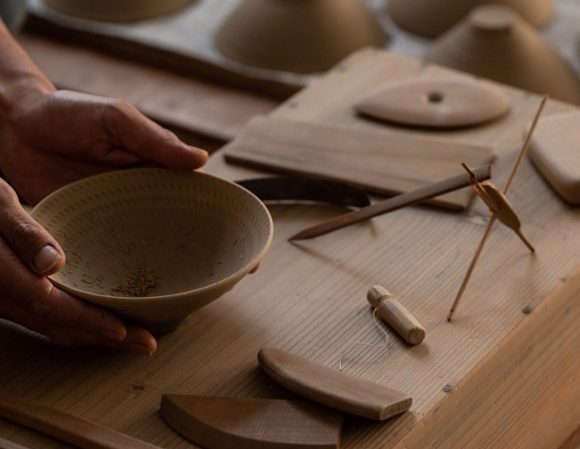
Geometric designs decorate pots using methods such as hakeme (brushed slip design), tobikanna (jumping iron; the blade carves the top layer and creates patterns), and kushi-kaki (design made by a wooden comb-like tool scratching through applied slip).
Mr. Wakunami: Since there are various methods involved in the craft making of Kyo and Kiyomizu Pottery, it is not easy to speak in one word of the characteristics. Ages ago when Kyoto was the Imperial City, skilled craftsmen gathered here, refining their styles of work. Only the best has survived the test of time, but even so, this includes a wide variety of styles, all of which can be considered to represent Kyo and Kiyomizu Pottery.
For generations, Soryu-Gama has developed and used its own seiji glaze. When compared to other seiji glazes, it is a painstaking process, but we continue this for our own best results.
Mrs. Wakunami: Also, although usually we work together just side by side, we have really different style of making things. I mean even the position we sit making pottery. I use small chair and pottery wheel stands in front of me a little higher than a chair. My husband sits on the small special table crossing his legs and pottery wheel stands in front of him the same level. It`s not just a personal choice, it`s a long tradition. Kyoto pottery was influenced by China directly, so my husband uses Chinese style of pottery making. In Fukuoka it was strong influence of Korean where artisan usually sit on the chair, so I use this style.
– Thank you! That’s fascinating! And now it`s interesting to know about your mixed style of pottery.
Mrs. Wakunami: As I came to Kyoto from Fukuoka, I brought our tradition and since that time we are together have made something like a new style of pottery mixing our families` traditions (Kyo-yaki Pottery and Koishiwara Pottery).
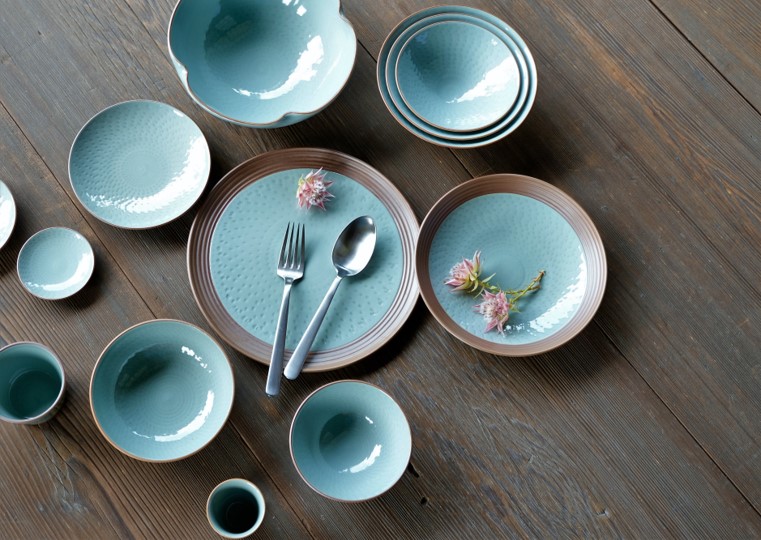
And what makes Soryu-Gama shop different from others is a unique celadon color which is common for Kyo-yaki Pottery, but the pattern on our potteries is made by special tool tobi-kanna which is used in Fukuoka. So, we combine the best of our traditions and make something special that you can find only at Soryu-Gama shop.
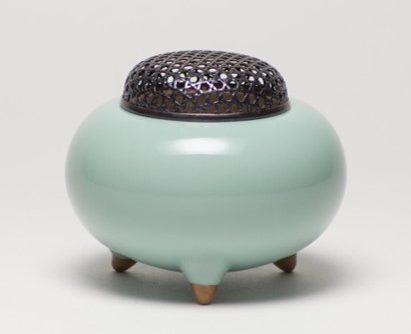
One more specific thing of our shop is combining with other traditional crafts. For example, collaboration with bamboo craftsman: adding bamboo straw to ceramic plate and incense burner.
– I think that it’s very interesting to see all the processes of making such potteries.
We perform all stages of pottery making in our studio, from throwing on the potter’s wheel to glazing and firing. We are happy to describe to you the steps in making any of the pieces you will see in our gallery.
Most of the tools we use in our studio for pottery throwing on the wheel are hand made from wood, as each pot has its own unique form, making this necessary. Our various glazes each require a different filter size for sifting, from a coarsely sifted formula to a finer one.
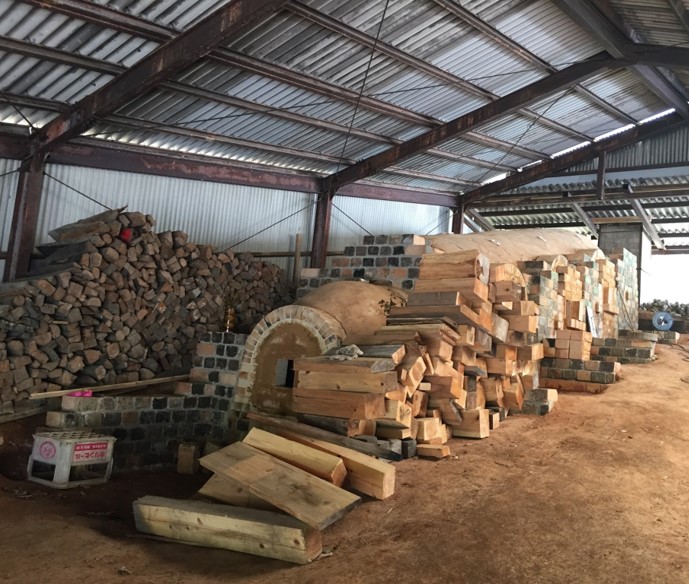
– What items do you usually make at your shop?
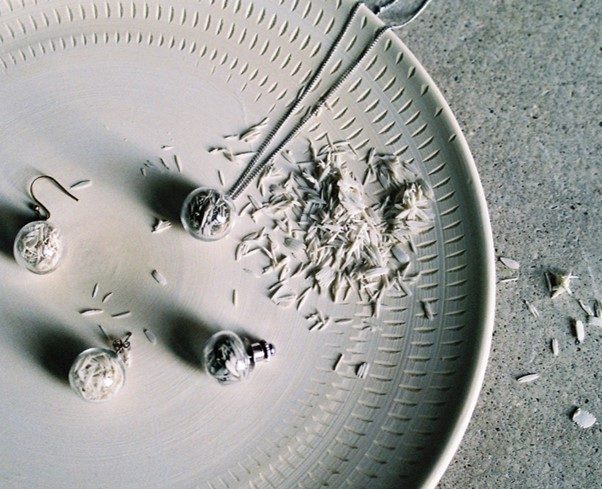
We make a lot of traditional things such as tea ceremony items celadon incense burner, coasters, wares, flower wases and planters which you can put on the table or to hang as a decoration and other items. Also, we use the baked pieces of clay that left after using tobikanna (jumping iron) to create fragile accessories that are good for young people.
We try to create the same blue color of celadon as the sky after the rain, clear and high. Though celadon is the main theme but we have white porcelain and yellow porcelain.
– Is your pottery popular only in Japan?
No, not only in Japan. We went to different countries held workshops there and gave lectures about Japanese pottery. So, our items are recognized not only in Japan but in America, Rome, Taiwan, France etc. as well.