ARCHIVEPAST INTERVIEWS
Showen Kumihimo – Traditional braiding craft

Shun Hatta
(SHOWEN Kumihimo)
Born and raised in Kyoto, entered Kumihimo company and now mastering the art of Kumihimo, challenging the new ways of applying this traditional craft to our modern live.
Born and raised in Kyoto, entered Kumihimo company and now mastering the art of Kumihimo, challenging the new ways of applying this traditional craft to our modern live.
– What is Kumihimo?
Using your yarn, you can usually make different things. You can knit it, you can make a fabric, or you can create a figure using the technique of crossing bundles of three or more threads like a braid, and Kumihimo is one of them. So, since we use more than three yarns at the same time, it makes the thing much more durable, stronger and more various in forms and shapes. Strings braided this way are the most complex and decorative and you can make a wide variety of products.
– How and where Kumihimo is used?
For most Japanese nowadays when they hear the word “kumihimo” the main thing which comes to their mind would be braided belt accessory for traditional kimono gowns and fashion called obijime.
That is right because obijime is very widely used in Japan, but also there are a lot of different ways how people can use kumihimo, as in traditional and also in modern ways.

– Which things besides obijime do SHOWEN Kumihimo product?
Showen’s product use threads from many materials and handcrafts braids into a multitude of products ranging from straps to bowties.
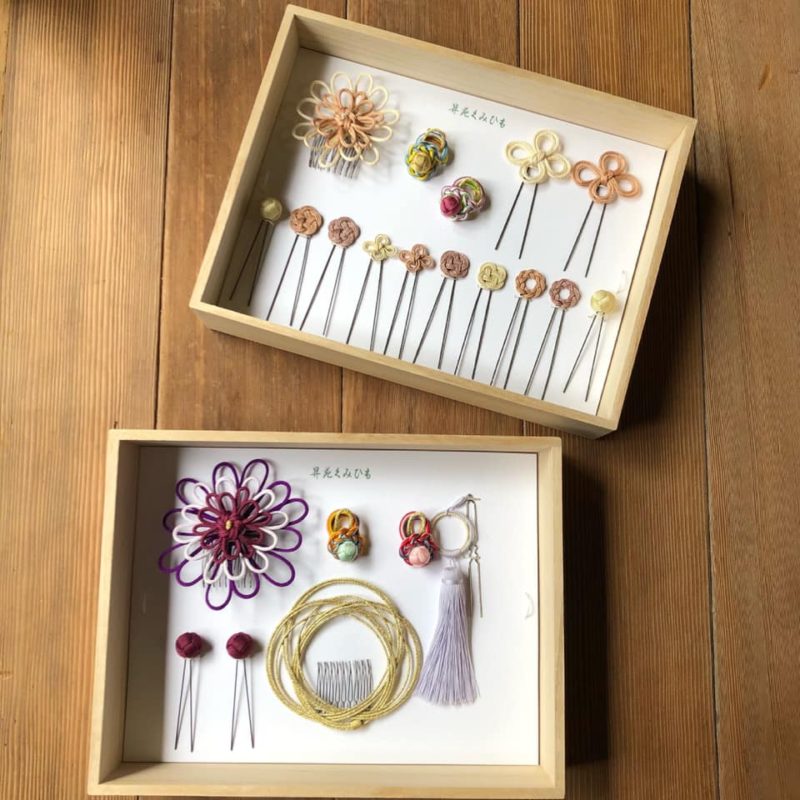
We product hair accessories traditionally used with kimono gowns; charms, which are very popular in Japan, they bring a fresh pop of color and decoration to any object like keychains, cellphones, zippers, etc; glasses cords, the newest addition to the product line, these glasses cords fit on all standard frames and stylishly and securely keeps your glasses around your neck; card holders which are truly unique and luxurious to the touch; tea containers traditionally used to store Japanese tea, these air tight containers are ornately crafted by hand with silk thread of various colors.
– Oh, I see. Which techniques or tools do you use in your work?
In our manufacture we use as automatic machine and sure we still make a lot of our product by hands. But even in case we use automatic machine we have 6 steps of preparing yarns before it will start to braid.
First of all, we should treat the thread by the process of cleaning and refining the fibers to absolute purity. Then dyeing the fibers to the required color palette. From here it is rested before it continues in the refinement process.
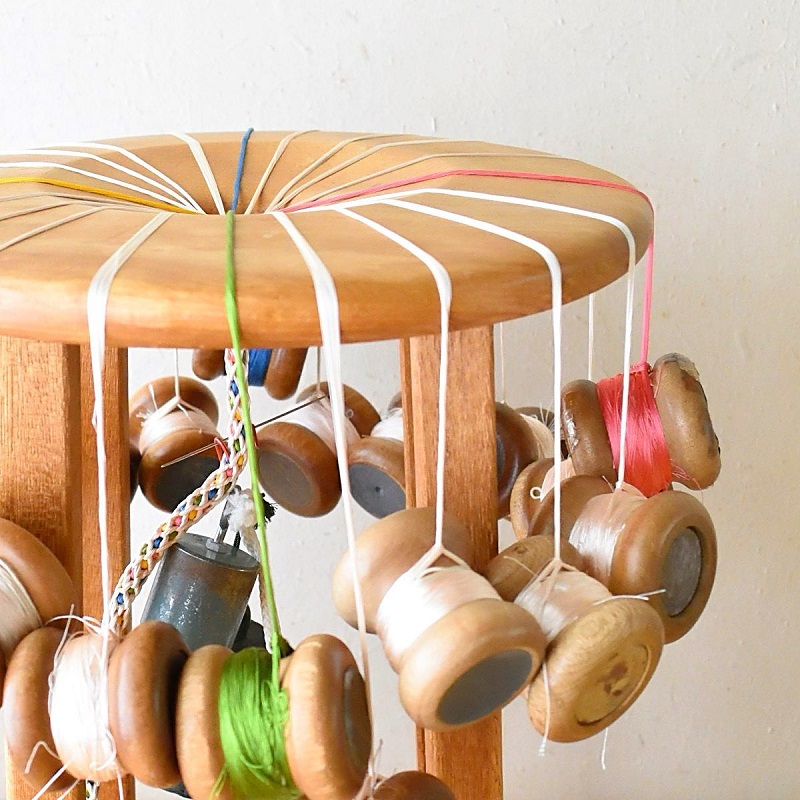
After that we take the bundle of cleaned and dyed fibers and placing them onto a wooden spool before moving to the thread counting process. Next steps are increasing the thread count, twisting the thread, placing the thread on the spindle, placing the spool on the machine.
And then the machine braiding process starts. And last step is handcrafted designs from braids in which designers will handcraft the finishing touches to the braid or continue transform the braid into more products.
– What about hand braiding techniques?
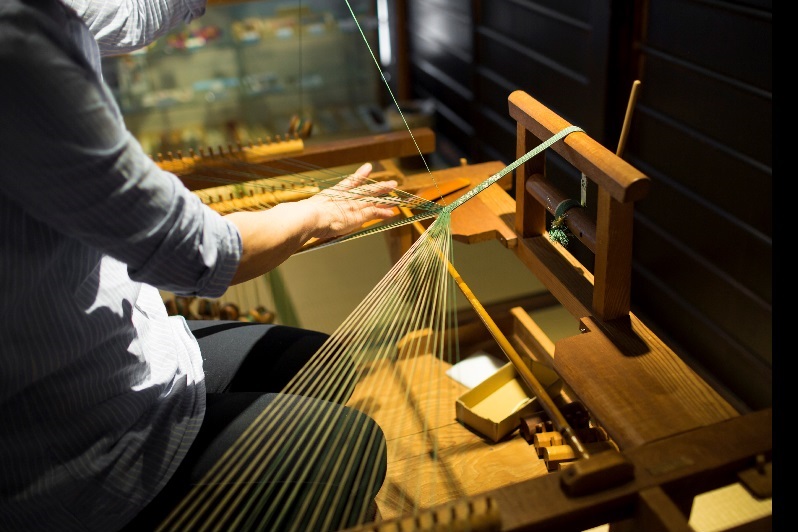
There are 4 main types of tools which we use in hand braiding: Marudai, Kakudai, Ayatakedai, and Takadai. These tools are used in different ways depending on whether they are used to make round or flat strings, and what kind of patterns are needed. Maybe it would be an impressive fact that the biggest number of bobbins we use at the same time is 100!
– This is really inmpressive! Could you tell us about your shop and the building in which your shop is located?
Showen Kumihimo is a traditional textile manufacturing which was founded in 1948 by Noboru and Misao Kaji, husband and wife, in Uji, Kyoto. They learned their braiding methods from relatives in Iga, where “Iga Kumihimo” originated.
And speaking about the building, it is now in Uji area and looks very austenitic: in old house with more than 100 years history. This building was built by founder of the company. This building was designated as important cultural property in Uji city. And it`s located very close to Byodoin temple.