ARCHIVEPAST INTERVIEWS
Miyagawa Tokusaburo Shoten – Kimono shop

Tokusaburo Miyagawa
(Miyagawa Tokusaburo Shoten)
Miyagawa Tokusaburo Shoten was founded in 1903 by the first owner, Tokusaburo Miyagawa, as a kimono shop.
Nowadays, in addition to ordinary kimonos, they are doing various jobs such as kimono-rental and styling support for rare antique kimonos and support for craftsmen involved in traditional crafts.
Mr. Tokusaburo Miyagawa, the 4th generation owner of Tokusaburo Miyagawa Shoten
Mr. Miyagawa Tokusaburo not only sells kimonos but also styles it, combines traditional culture with modern looks. In order to update the traditional culture of Kyoto, including rental and styling support, Mr. Miyagawa supports craftsmen involved in traditional crafts. This time, we interviewed Mr. Tokusaburo Miyagawa, the 4th generation owner of Tokusaburo Miyagawa, who has such a unique job.
― In addition to kimono, you also have a traditional craft workshop for overseas customers, right?
That’s right. Before taking over the store, I was working in shipbuilding in the United States. That’s when I realized that Japan is very attractive from the outside. So now I want to convey the charm of Japan. And since I wanted to support the craftsmen by taking over the current shop, I am now working on a workshop tour.
– I see. And you are running a kimono shop as your main business.
I think that all my businesses are main, but it is true that the kimono shop is taking central place.
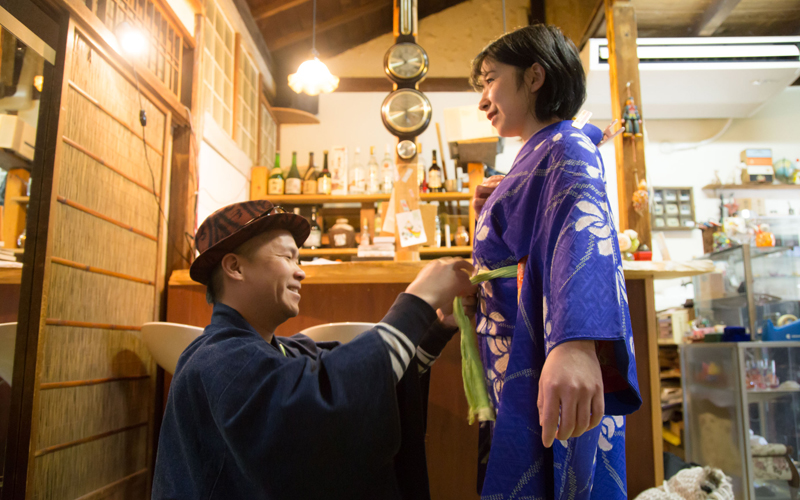
– Speaking of your work with kimono, it seems that you are not only selling ordinary kimonos, but also styling antique kimonos. How did that begin?
At the time of its founding, it was a wholesale business, but it changed to a retail business eventually.
By the time I took over the store. The kimono that my father and mother had sold to customers in the past was once returned. After 30 or 40 years, a customer who bought a kimono in his 20s or 30s said, “This pattern doesn’t suit me anymore. Please sell this kimono to someone who will like it.”
Then the number of such products increased, and I offered them to customers and sold them. That was the start of my kimono shop.My parents had a lot of knowledge about kimono and they were able to pass on the know-how to customers, but I couldn’t because I didn’t have much knowledge at that time. However, I began to notice the “fun of combining” and styling. I didn’t have any knowledge, but I had been watching kimono since I was little, so I was able to style them.
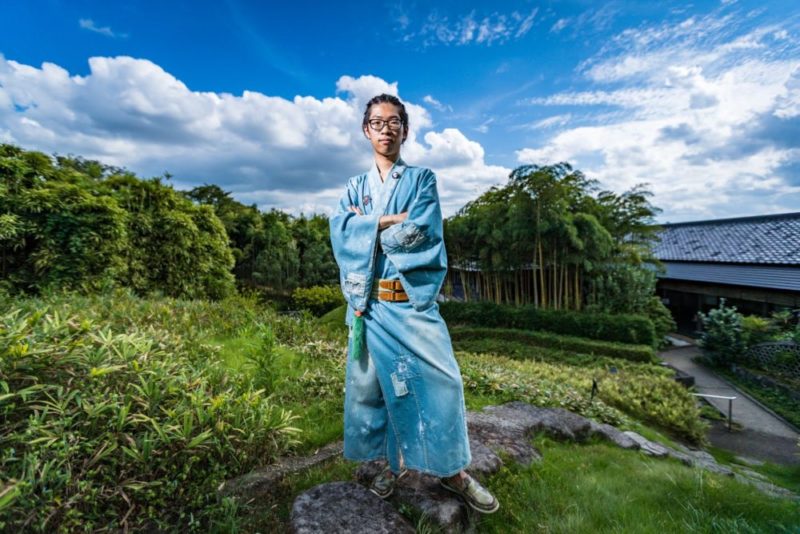
– I saw the style, but it feels very different from ordinary kimono.
I agree. This also started with the question, “How far does a kimono look like a kimono?”. As a beginner I asked many kimono-dealers, “I want to buy a kimono, but how much is the set?”
There were a lot of shops that answered, “If you have a complete set, it’s 100,000 yen at the cheapest.” In order to wear a kimono, you need a lot, tabi, undershirts, undershirts, and things that you can’t see from the outside.
Therefore, it costs more than 100,000 for a real kimono. It’s hard to get them all. So I started thinking that it would be nice if I could substitute something that I couldn’t see from the outside or sandals with something I already had.
I don’t think this is the idea of a regular kimono shop. I was wondering, “How much can I scrape? I can’t remove the upper kimono. I also need an obi. If I have these two, I’ll be able to make it look like a kimono.” Or something like “Isn’t it okay to wear shoes instead of sandals?”
I was thinking of what is the material that fits it. For example, if you wear sneakers with a very high-class kimono fabric, it’s probably strange. Therefore, I started to choose materials such as denim, cotton and wool for my kimonos.
– I see. Who is your target audience?
Many people are over 40 years old and go abroad for work. Many people who want to sell something overseas buy it as a racing uniform.
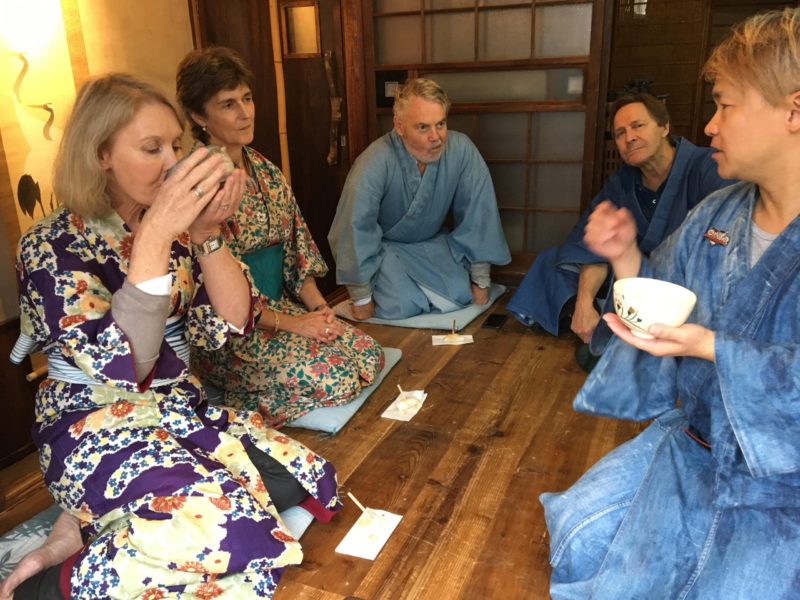
– Are you styling traditional kimonos as well?
Of course, you can also choose a traditional kimono. We always communicate with our customers and choose a kimono according to their needs.
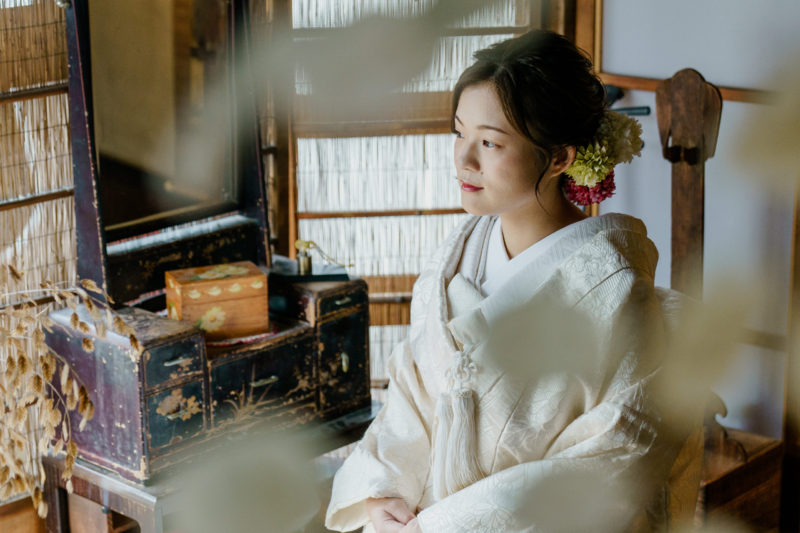
– I think, you are doing a lot of unique work.
I have a desire to “update the culture”. The culture of Kyoto is very rigid, and there are many craftsmen who say, “If this craftsman disappears, this tradition will disappear.”
I’ve been using old tools and materials all the time. Now that we have more convenient and better materials and technologies, the products may not disappear that easily. The old ones may be good, but I think it needs to be updated a little more, and I think that by updating, only the most important ones will remain.